One in three Americans lives in a county that was hit by a federally declared disaster in 2023. That number stopped me when I came across it. It reframes the whole conversation about emergency response tech, because this isn't a niche problem anymore.
This week, St. Louis-based aerospace company WingXpand announced it's joining the Verizon Community Disaster Resilience Innovation Accelerator, a program powered by MassChallenge that brings together emergency response teams and tech companies to explore new tools for disaster assessment. The partner here is Verizon Frontline, Verizon's public safety division, which has been pushing into emergency comms infrastructure for a few years now.
So what is WingXpand actually building? That's where it gets interesting.
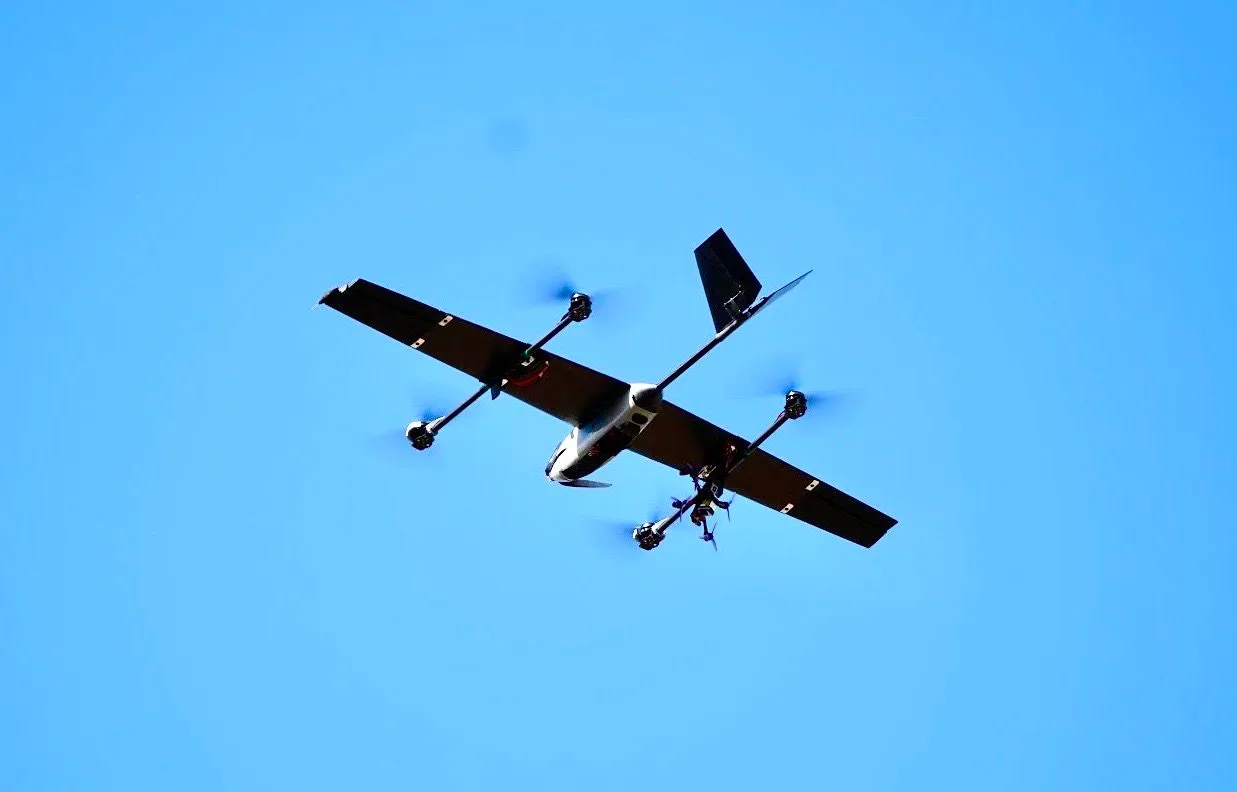
WingXpand makes something called the XRAI Smart Plane, which is, genuinely, a fixed-wing drone that folds up and fits inside a backpack. The whole thing deploys in under two minutes, according to the company. It can cover large areas quickly, which gives it a real advantage over quadcopters in post-disaster scenarios where you need to survey flood zones, downed infrastructure, or wildfire perimeters across miles, not meters.
Fixed-wing drones aren't new. But the backpack form factor matters a lot when you're talking about first responders who are already carrying gear, working in degraded conditions, and don't have time to set up a ground station. Portability is the actual value proposition here, not just the flight specs.
The company is also working on integration with Verizon's network infrastructure, which raises the obvious question of what happens when the network is down. Severe weather events have a habit of taking out cell towers. Honestly, I'm not sure this holds up as a full solution without some clarity on how the drone operates in connectivity-degraded environments. The Drone Girl notes the accelerator program could help WingXpand grow its disaster response capabilities, but the specifics of how network dependency is handled remain unclear.
WingXpand hasn't disclosed exact figures on fleet size, unit cost, or how many emergency agencies they're currently working with. What we do know is that the company has existing military contracts, which suggests the underlying technology has cleared some level of durability and reliability testing. That's not nothing.
The Verizon Frontline accelerator through MassChallenge is the formal structure here. MassChallenge is a well-established startup accelerator with a track record in cleantech and social impact; this is their lane. Verizon has been investing in public safety infrastructure seriously enough that Frontline is now a distinct brand within the company, not just a marketing label.
What we don't have: deployment timelines, pricing for municipal or state emergency agencies, or any published data on the XRAI's performance in actual disaster scenarios. The company has military experience, but military use cases and FEMA-adjacent civilian disaster response are different environments with different constraints. It's too early to say how that translation plays out.
I initially thought this was a fairly standard accelerator announcement, the kind that generates a press release and then goes quiet for eighteen months. But I think there's something worth paying attention to here, specifically around the combination of fixed-wing portability and cellular network integration.
Most drone-based disaster response coverage focuses on quadcopters, and for good reason: they're hoverable, they're maneuverable, and they're everywhere. But they're also slow over distance and battery-limited in a way that makes large-area assessment genuinely hard. A fixed-wing drone that fits in a backpack and can cover significant ground quickly is a different tool, not a replacement, but a complement.
The Verizon angle is also worth watching. Verizon Frontline has been deploying mobile command units and satellite-connected vehicles into disaster zones for a few years. If they're now pulling in drone companies through an accelerator, that suggests they're thinking about aerial data as part of a broader emergency infrastructure stack, not just as a standalone gadget demo.
Tbh, the thing that interests me most is the community resilience framing. The accelerator isn't just about first responders; it's about community resilience, which is a broader and fuzzier goal. Dronelife describes the program as exploring tools for both disaster assessment and community resilience, and those are pretty different things. Assessment is a technical problem. Resilience involves trust, access, equity, and a lot of factors that a backpack drone doesn't directly address. This raises questions about what success actually looks like for this accelerator, well, multiple things, really.
WingXpand is at an early stage in this particular partnership. The accelerator format means they'll be working alongside Verizon and emergency teams to test and refine use cases, which is genuinely useful if the feedback loops are real and not performative. MassChallenge programs typically run several months, so we'd expect more concrete outputs by late 2026.
The broader context matters too. Drone regulations for emergency response have been loosening incrementally, with the FAA issuing more waivers for beyond-visual-line-of-sight (BVLOS) operations in specific public safety scenarios. That regulatory environment is still evolving, and it shapes what WingXpand can actually do in the field versus what they can demo in a controlled setting.
I think the honest version of this story is that WingXpand has interesting hardware and a smart partnership, and we don't yet know if it translates into something that meaningfully changes how communities respond to disasters. The backpack form factor is real. The military pedigree is real. The gap between a promising accelerator announcement and actual deployment at scale is also real, and based on limited public information, it's the part of this story I'd watch most closely.