Genesis AI's Eno Robot Ditches the Human Form. That's Actually Smart.
A French startup backed by Eric Schmidt just unveiled a headless, legless humanoid. Bob Macintosh thinks they might be onto something.
Image credit: Image via The Verge — AI. Used under fair use for news commentary. · source
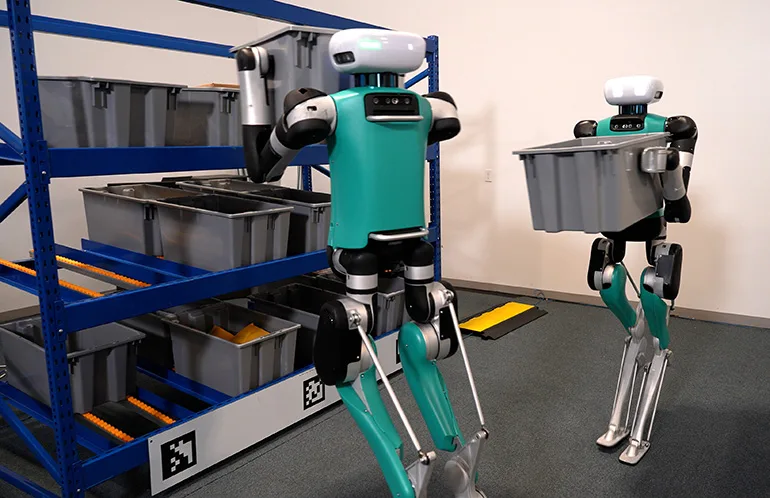
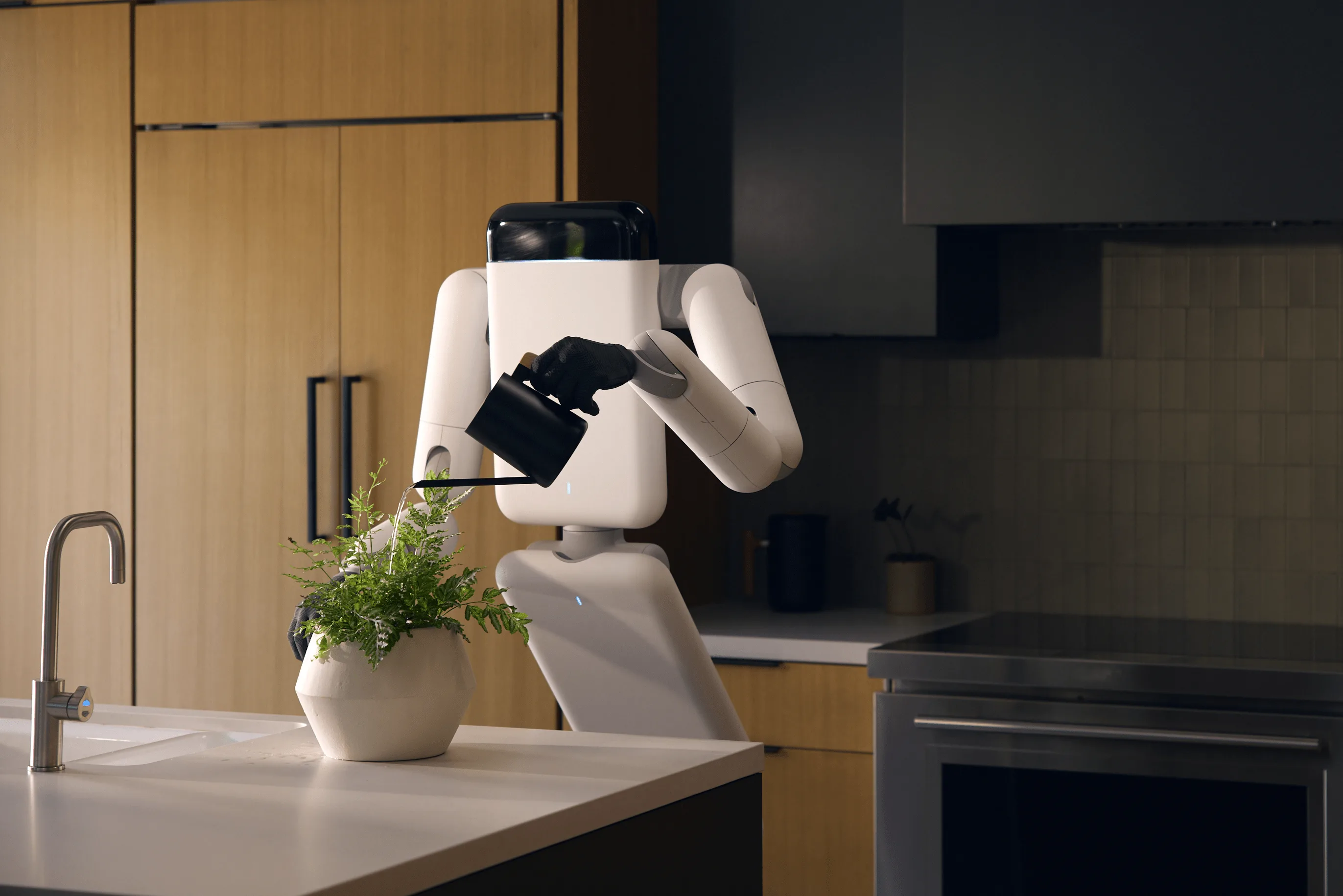
Picture a deck chair that can load a dishwasher. That's roughly the mental image you get when you first see Eno, the new robot from Genesis AI, a French startup that apparently has Eric Schmidt's phone number and his cheque book. No head. No legs. Wheeled base. Folds down flat. It looks nothing like the androids you've seen plastered across every trade show floor for the past five years.
And I'll be honest, my first reaction was a laugh. Then I thought about it for ten minutes and started coming around.
The 'humanoid' label has always been a bit of a trap. When I was at Kuka, we spent enormous energy on arm geometry and reach envelopes, trying to get manipulators to work in spaces designed for human bodies. Factories, warehouses, kitchens. The problem was never that the robot didn't look human enough. The problem was always whether it could do the job reliably, repeatedly, without tearing itself apart or taking out a nearby worker. The form factor was a constraint we worked around, not something we chased.
So when Genesis says, per The Verge, that "humanoid robots don't need to look human," I'm nodding along. That's not a marketing line. That's an engineering position. A sensible one.
Their argument is that Eno is designed "around human capability" rather than human appearance, which is a distinction worth sitting with for a moment. Human capability means dexterous hands, a useful reach, the ability to operate in spaces built to human scale. It doesn't necessarily mean two eyes and a torso. The hands, apparently, are the one part where Genesis did go fully anatomical, designing them to match human hand geometry as closely as possible. That tracks. Hands are where the real work happens. I've seen more robot deployments fail at the gripper than anywhere else.
Related coverage
More in Humanoids
The headlines are celebrating a $2.5B humanoid robotics deal. I'd pump the brakes a little.
Mark Kowalski · 25 Jun · 6 min
Sometimes the sources don't pan out. Here's what happened when I tried to write a humanoids story this week and ended up with Samsung deals instead.
Sarah Williams · 25 Jun · 3 min
Diffusion models are getting good at imagining robot movements, but 'imaginable' and 'physically possible' aren't the same thing. Researchers are starting to close that gap.
Sarah Williams · 25 Jun · 6 min
A batch of fresh robotics research tackles the same underlying problem from different angles: robots that can see but don't really understand where things are.