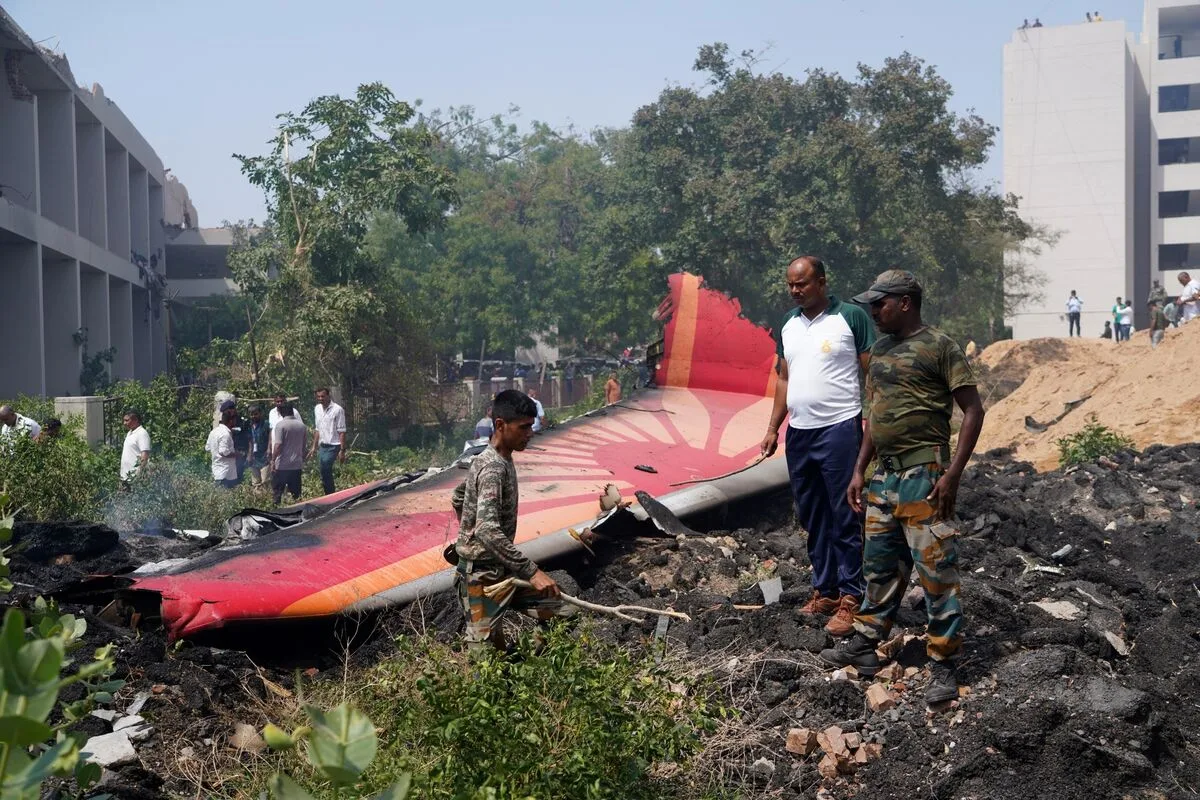
The investigation into last year's Air India crash, India's worst commercial airline disaster, will not produce a final report by Friday's mandatory one-year deadline. The engine examination, being conducted in the United States, remains incomplete.
I want to be upfront: this is not my usual beat. I cover robotics and AI research. But aviation safety investigations share enough methodological DNA with robotics failure analysis that the delay here is worth examining carefully, and the reasons behind it matter more than the headline suggests.
According to Bloomberg, investigators will miss the Friday deadline because an examination of the Boeing aircraft's GE engines, being conducted somewhere in the United States, still needs to be completed. A government agency subsequently confirmed the delay, stating the investigation into the disaster is simply not finished.
It is worth noting that the one-year deadline is not arbitrary. Under Annex 13 of the International Civil Aviation Organization's standards, accident investigation bodies are expected to publish a final report within twelve months of an accident, or issue a preliminary report explaining why they cannot. Missing this deadline is not unusual in complex investigations, but it is formally significant. The ICAO framework exists precisely because prolonged investigations delay safety recommendations that could prevent future accidents.
What remains unclear, based on available reporting, is the specific nature of what the engine examination has not yet resolved. Are investigators looking at manufacturing defects, maintenance records, fuel system behavior at takeoff, or something else entirely? The reporting does not say, and I only found two sources on this, both from Bloomberg, published a day apart. That is a thin evidentiary base for drawing strong conclusions about the investigation's direction.
For readers unfamiliar with aviation accident investigation, the timeline here is actually not surprising, even if it is frustrating. Modern turbofan engines are extraordinarily complex systems. A GE engine teardown and analysis at an authorized facility involves disassembling thousands of components, documenting wear patterns, analyzing metallurgical samples for heat signatures or stress fractures, and cross-referencing findings against maintenance logs and flight data recorder outputs.
To be precise, the process is not simply "look at the engine and see what broke." Investigators are trying to reconstruct a causal chain, often working backward from physical evidence to determine whether a failure was primary or secondary, whether it preceded or followed other system events, and whether it was predictable given the aircraft's maintenance history. This kind of forensic engineering work is slow by necessity, not by negligence.
The Boeing aircraft involved adds another layer. Boeing has faced sustained scrutiny over its aircraft systems and manufacturing quality in recent years, and any investigation involving a Boeing airframe carries additional institutional weight. Whether that scrutiny is affecting the pace of this particular investigation is, genuinely, unclear from the available reporting.
India's commercial aviation sector has grown substantially over the past decade, and this crash, described by Bloomberg as the country's worst commercial airline disaster, represents a significant safety event for a market that has been expanding rapidly. The pressure to produce a credible, thorough final report is therefore considerable, both for domestic regulatory confidence and for international aviation safety governance.
The delay, in a way, cuts in two directions. On one reading, it suggests investigators are being rigorous rather than rushing to a conclusion before the physical evidence is fully analyzed. A premature report that gets the causal chain wrong, or that misses a contributing factor, would be worse than a late report that gets it right. On another reading, every month without a final report is a month in which safety recommendations that might emerge from the investigation are not yet formally issued, and not yet formally adopted.
I know I am being somewhat pedantic here, but the distinction between a "final report" and an "interim report with safety recommendations" matters. Investigations can, and often do, issue interim safety recommendations before the final report is published. Whether Indian investigators have done so in this case is something the available reporting does not address.
For anyone following this investigation, the questions worth tracking are specific. First, what exactly is the engine examination trying to determine, and which facility in the United States is conducting it? GE Aerospace operates test and teardown facilities in multiple locations, and the specific facility matters for understanding the scope of the analysis.
Second, have any interim safety recommendations been issued? If investigators have already identified contributing factors with enough confidence to recommend immediate action, that is important information for Air India, for Boeing, and for other operators of similar aircraft.
Third, what is the revised timeline? A delay announcement without a revised target date is not particularly informative. The ICAO framework anticipates delays but expects investigation bodies to communicate a new expected completion date.
The sample of available reporting here is genuinely thin. Two Bloomberg articles, published within a day of each other, covering essentially the same announcement from slightly different angles. This hasn't produced the kind of detailed technical reporting that would let an outside observer assess where the investigation actually stands. That may change as the story develops, and it probably will, given the scale of the disaster and the institutional attention on both Air India and Boeing.
For now, the most accurate summary is this: a complex investigation into a serious accident is taking longer than the formal deadline requires, for reasons that appear to be substantive rather than bureaucratic, and the full picture remains incomplete.